
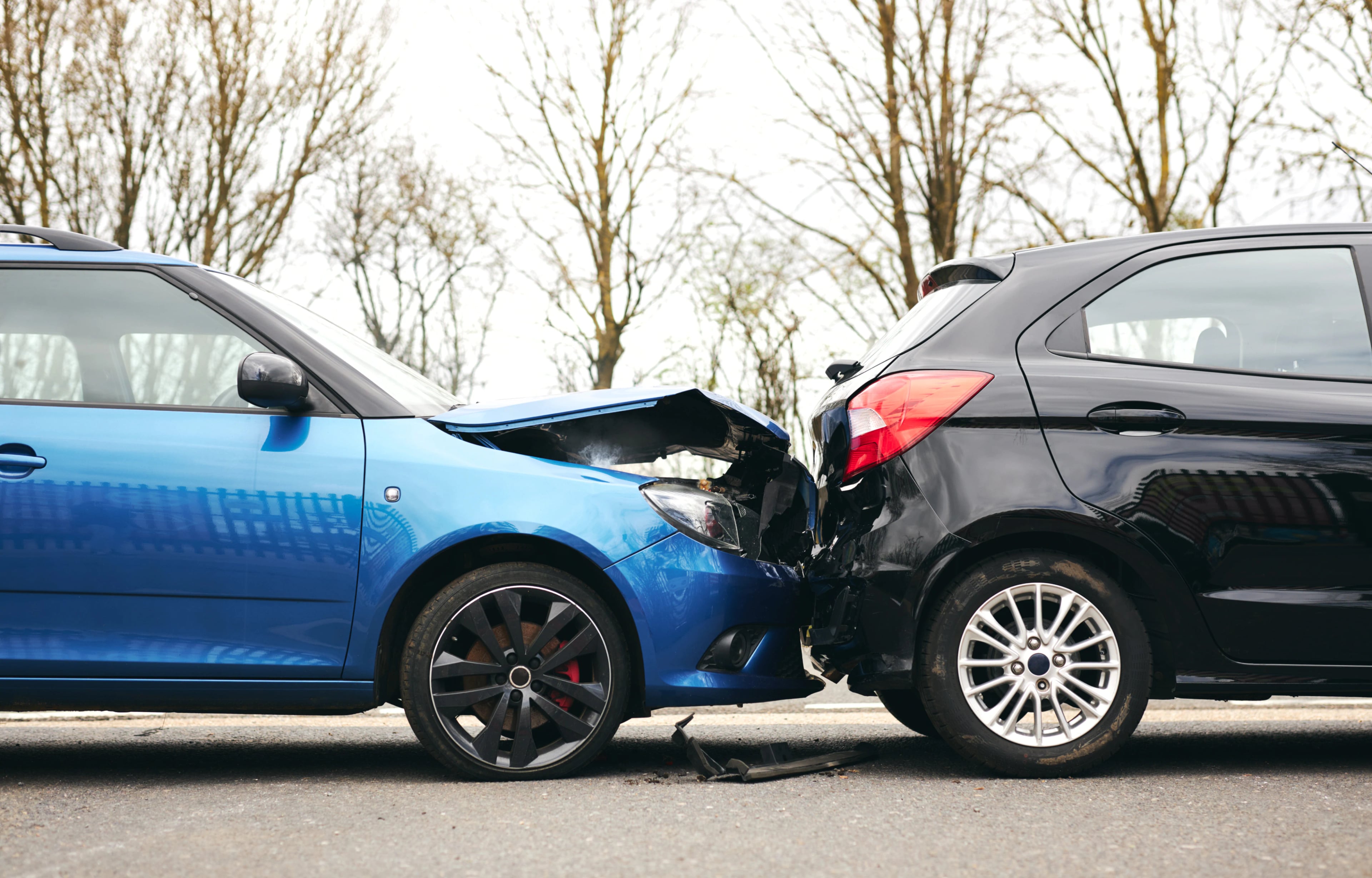
You're stopped at a red light, minding your business, when suddenly your world jolts forward. In the seconds after a rear-end accident, your neck is throbbing, your hands are shaking, and the driver behind you is already telling you it was your fault. Don't believe it.
In Texas, fault in rear-end collisions isn't always as simple as "the person who hit you is responsible" — but it usually is. Here's a quick breakdown of how fault typically falls:
- Rear driver is at fault: Tailgating, distracted driving, speeding, or failure to brake in time
- Lead driver may share fault: Sudden and unsafe lane changes, broken brake lights, or intentionally brake-checking another driver
- Third parties can be liable: Defective vehicle parts, poor road conditions, or a negligent employer if a commercial driver caused the crash
- Multiple parties can share fault: Texas modified comparative negligence means more than one driver can be held responsible
No matter where the fault lies in your case, the insurance companies involved will fight to minimize what they owe you. That's why who you call next matters more than you think.
Mark Thiessen has built his reputation fighting and winning hard cases across Texas, and he's ready to go to battle for you. If you or someone you love was hurt in a rear-end collision, don't wait. Call our Houston, Texas car accident lawyers at (713) 864-9000 or contact us online for a free consultation today.
“I was in an auto accident and I came to the best personal injury law firm in Houston. Thank you to attorney Mark Thiessen for assisting me every step of the way. I’m very grateful and happy for my compensation. I highly recommend this firm for all auto accidents.”
— David A.
Whose fault is it in a rear-end collision?
Fault in a rear-end collision isn't always handed to one driver automatically, even though many people assume it is. Texas law looks at the specific actions of every driver involved, and sometimes the road itself or a third party plays a bigger role than anyone expected.
If you've been rear-ended in Texas, here's what you need to know about who could be held responsible.
Rear driver is at fault
The driver who strikes another vehicle from behind is at fault in the vast majority of rear-end cases, and for good reason. Every driver in Texas has a legal duty to maintain a safe following distance and stay alert enough to stop when traffic slows or stops ahead. When a rear driver is tailgating, distracted by their phone, speeding, or simply not paying attention, they've breached that duty, and the injured driver has a strong foundation for a claim.
What many people don't realize is that "I didn't have time to stop" is not a legal defense. It's an admission. Texas courts and insurance adjusters alike understand that adequate following distance exists precisely for unexpected stops, and a driver who couldn't stop in time likely wasn't leaving enough room to begin with.
If the rear driver was also under the influence, fatigued, or operating a commercial vehicle, the liability, and potentially the damages, can increase significantly.
Lead driver may share fault
While the rear driver is most often at fault, the lead driver isn't automatically off the hook. Texas follows a modified comparative negligence rule, which means fault can be split between multiple parties based on their contributions to the crash.
A lead driver who cuts across traffic without signaling, brake-checks another driver out of road rage, or merges into a lane without enough space may bear a meaningful share of responsibility for what follows.
Broken or non-functioning brake lights are another factor that can shift partial fault to the lead driver. If the driver behind had no way of knowing you were slowing down, that changes the analysis. This is important to understand because insurance companies will look for any reason to assign fault to you and reduce their payout.
Third parties can be liable
Fault doesn't always stop at the two drivers directly involved. In some rear-end cases, a third party carries significant or even primary responsibility for the crash. A vehicle manufacturer whose defective brakes failed without warning, a municipality that allowed a dangerous road condition to go unaddressed, or a trucking company whose driver was operating on an illegal schedule can all be held liable depending on the facts of the case.
Third-party liability matters because it can dramatically expand the pool of available compensation. Commercial trucking companies, for example, carry much larger insurance policies than individual drivers, and their employers can be held responsible for their negligence under a legal theory called respondeat superior.
These cases are more complex than a standard two-car claim, and the injuries involved, whether your chest hurts after a car accident or you suffered a concussion after a car accident, can be severe enough to warrant pursuing every available source of recovery.
Multiple parties can share fault
Some rear-end crashes involve a chain reaction: one driver rear-ends another, who is then pushed into the car in front of them. In those scenarios, liability can be spread across several drivers at once. Texas law is built to handle exactly this kind of situation. Modified comparative negligence allows juries and insurers to assign a percentage of fault to each party, with each responsible driver's insurance covering their proportionate share of the damages.
This also means that even if you were partially at fault, you may still be entitled to recover compensation as long as your share of fault doesn't exceed 50%. Unlike head-on collisions and t-bone accidents, rear-end cases often come with clearer evidence, but that doesn't mean insurers won't fight over every percentage point.
When multiple parties are involved, having Texas personal injury lawyers who know how to build a case against all responsible parties and file a catastrophic injuries lawsuit if the situation calls for it, is essential.
How do insurers determine who was at fault?
Insurance companies don't determine fault out of a sense of fairness. They determine it in whatever way costs them the least money. Understanding how they build their case against you is the first step toward making sure their version of events doesn't become the only version that matters.
The investigation process
When a claim is filed, the insurance company assigns an adjuster almost immediately — and that adjuster's job is not to help you. They'll review the police report, interview witnesses, inspect vehicle damage, and request your recorded statement, often before you've spoken with an attorney or fully understood your injuries. What they find in those early days can shape the entire direction of your claim.
What they look at
Insurers pull from several sources when building their fault determination:
- Police report: The officer's observations and any citations issued carry significant weight, though they're not the final word on liability
- Witness statements: Bystander accounts can corroborate or contradict what either driver claims happened
- Vehicle damage: The location, angle, and severity of damage help reconstruct the sequence of events
- Black box data: Many modern vehicles record speed, braking, and steering inputs in the seconds before a crash
- Traffic and surveillance footage: Nearby cameras can capture the collision or the driving behavior that led to it
- Your own statements: Anything you say to an adjuster, even in casual conversation, can be used to reduce your claim
Why their determination isn't the final word
An insurer's fault determination is not a legal ruling. It's a business decision made to protect their bottom line, and without an attorney pushing back with independent evidence, it often sticks by default. When insurers know they're facing lawyers willing to take the fight to court, their fault calculations have a way of becoming a lot more reasonable.
FAQs
Is it automatically your fault if you rear-end someone in Texas?
Not automatically, but the presumption heavily favors the lead driver. Texas law requires every driver to maintain a safe following distance and stay alert enough to stop when traffic slows, so rear drivers are at fault in the vast majority of cases. However, if the lead driver brake-checked you, cut you off, or had broken taillights, fault can shift.
Is getting rear-ended serious?
Rear-end collisions can cause injuries far more serious than the impact might suggest, including whiplash, herniated discs, traumatic brain injuries, and chronic pain that lingers for months or years.
Symptoms don't always appear immediately, which is why many victims make the mistake of skipping medical care after what seems like a minor crash. If you've been rear-ended, get checked out by a doctor right away and document everything.
What is the average payout for a rear-end collision in Texas?
There's no reliable average because payouts vary dramatically based on the severity of injuries, the clarity of liability, available insurance coverage, and the quality of your attorney.
Minor soft tissue cases may settle for a few thousand dollars, while crashes involving serious injuries or commercial vehicles can result in settlements worth hundreds of thousands or more. The best way to understand what your case is worth is to speak with an attorney.
Hurt in a rear-end collision? The giants have lawyers. You should, too.
Rear-end accidents can wreak havoc on your life, and the insurance companies know exactly how to use that chaos against you. They move fast, they're well-funded, and their entire strategy depends on you not knowing your rights or not having someone in your corner who does.
Mark Thiessen and his team have recovered millions for injured Texans who refused to accept lowball offers from insurance companies. We investigate every angle, fight back against unfair fault determinations, and prepare every case as if it's going to trial — because that's what it takes to make the giants pay what they actually owe.
Don't let them lowball you into a settlement that doesn't cover your medical bills, your lost wages, or the pain you're going to be living with long after the case is closed. Call (713) 864-9000 or contact us online for a free consultation today. You won't pay a dime unless we win.
More Helpful Articles by We Fight Giants: