

That seat belt saved your life. Now it's leaving you in pain, and you don't know if it's something to shrug off or something to panic about.
We see this all the time. A client walks away from a wreck feeling grateful to be alive, maybe a little sore, and assumes the worst is behind them. Then two days later they're doubled over in pain, or worse, sitting in an ER being told they have internal bleeding they didn't even know was happening. The insurance company, meanwhile, is already building a file that treats your case as "minor impact, minor injury," using the exact same seat belt that just put you in the hospital as evidence against you.
That's not going to happen on our watch. We're going to walk you through exactly what seat belt injuries look like, what they feel like, how long they take to heal, and what red flags mean you need to get to a doctor right now rather than tomorrow. Then we're going to tell you what it takes to make sure the people responsible, and the insurance company standing behind them, actually pay for what happened to you.
Continue reading to find out everything you need to know about seat belt injuries, or, if you’ve been injured in an accident, get in touch with Thiessen Law Firm today at (713) 864-9000 to start fighting for what you deserve.
What is a seat belt sign?
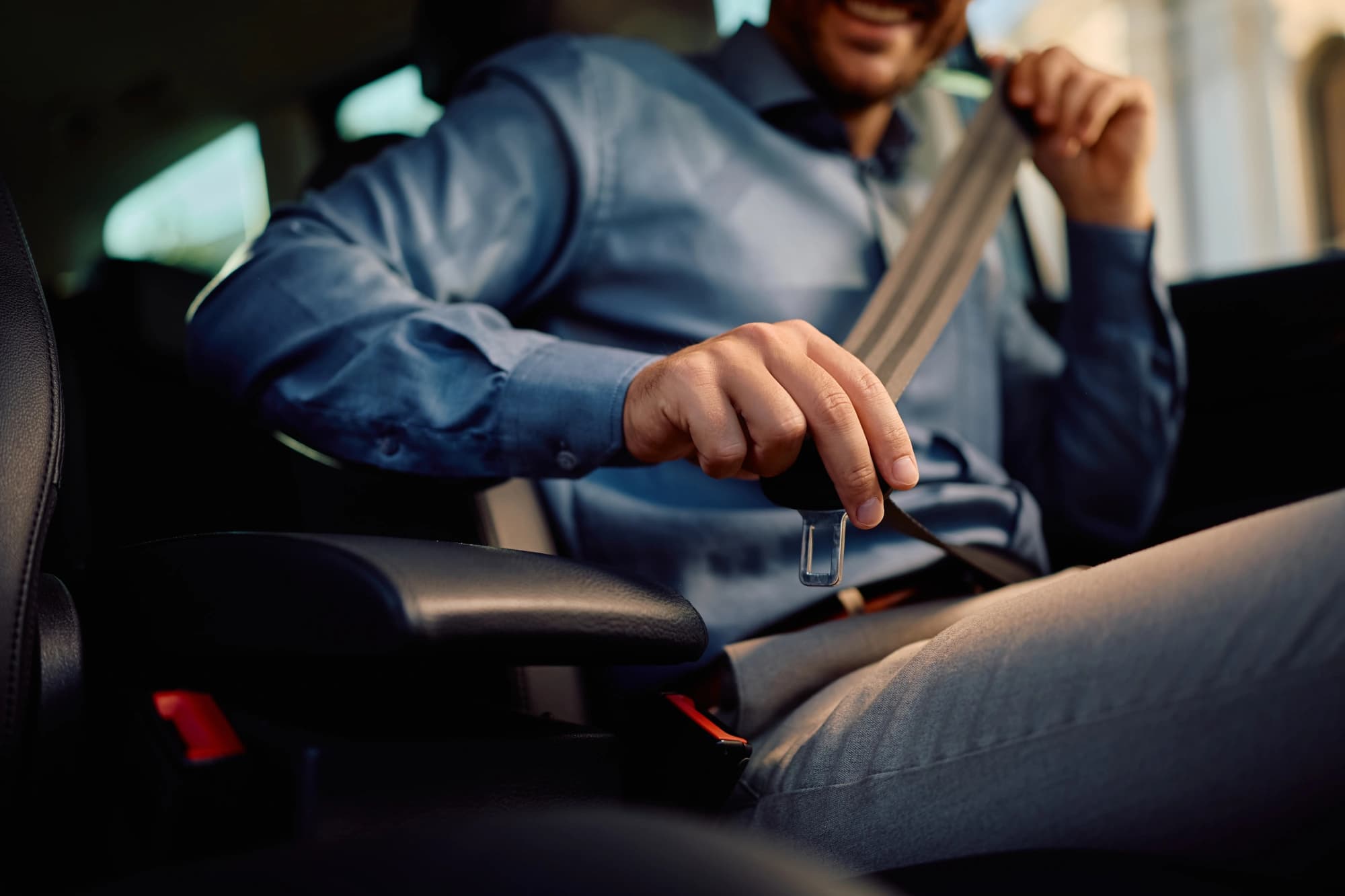
Doctors call the long red or purple stripe running across your chest, shoulder, or hips left behind by the seat belt a “seat belt sign,” and it's not just a bruise. It's evidence of exactly how much force your body just absorbed.
That belt did its job. It kept you from becoming a projectile inside your own car. But the same restraint that stopped you from flying through the windshield also slammed your organs, bones, and soft tissue against a strip of nylon webbing at highway speed. The mark on your skin is the visible evidence of an invisible collision happening underneath it.
Here's something insurance companies don't want you thinking about: a seat belt sign is one of the strongest predictors doctors use to flag patients for deeper internal injury.
A clean-looking bruise can sit directly on top of a lacerated spleen, a bruised bowel, or a fractured rib. If you see this mark on your body, it's not a “let's wait and see” situation. It's a “get to a doctor today” situation.
Seat belt injury symptoms you should never ignore
Some injury symptoms show up immediately. But seat belt injury symptoms often take hours, or even a day or two, to fully announce themselves. This is exactly why so many people get sent home from the scene of a crash feeling “fine,” only to end up in an emergency room later that night.
Pay close attention to any of the following in the hours and days after your accident:
A visible red, purple, or bruised line across your chest, shoulder, or lap
Sharp or worsening abdominal pain, especially when pressed
Chest pain, tightness, or pain when taking a deep breath
Difficulty breathing or shortness of breath
Nausea, vomiting, or a swollen, tender stomach
Dizziness, lightheadedness, or fainting
Fever developing in the days following the crash
Bruising that seems to be spreading or getting darker rather than fading
Any one of these symptoms deserves a same-day trip to a doctor or the ER. Several of them together are a red flag for internal bleeding, organ damage, or a fracture that hasn't fully made itself known yet. Don't gamble with your life to avoid an awkward ER bill. We'll deal with getting that bill paid for later. Your job right now is to get evaluated.
What is the most common seat belt injury?
The most common injury caused by seat belts is bruising and soft tissue damage across the areas where the belt made contact — typically the chest, shoulder, and lower abdomen. As we said, this is often called the seat belt sign and, in milder crashes, it may be the extent of the damage.
But “most common” doesn't mean “least serious,” and it definitely doesn't mean you're in the clear.
Bruising and soft tissue trauma can mask more significant injuries sitting just beneath the surface, which is exactly why doctors don't stop at a visual exam when a patient shows up with a seat belt sign. They order imaging, because what looks like a bruise on the outside can be a warning sign of a much bigger problem on the inside.
Seat belt injury to chest
A seat belt injury to the chest happens when the force of the crash drives the shoulder strap into your ribs, sternum, and the soft tissue surrounding your chest cavity. In a high-speed or high-impact collision, this can mean fractured ribs, a bruised or fractured sternum, or trauma to the muscles and cartilage holding your rib cage together.
The danger with chest injuries is that broken ribs aren't just painful, they're a threat to what's underneath them. A fractured rib can puncture a lung, and blunt force to the chest can bruise the heart itself, a condition called myocardial contusion. If you're dealing with chest pain after a car accident, don't assume it's just soreness from the impact.
Seat belt injury to abdomen
The lap portion of your seat belt sits low across your hips and stomach, and in a serious crash, that pressure has to go somewhere. A seat belt injury to the abdomen occurs when the force of the collision compresses your internal organs against your spine and pelvis.
Your abdomen houses a handful of organs that are especially susceptible to damage during a crash. The organs most frequently affected by seat belt injuries include:
The small intestine and bowel, which can bruise, tear, or rupture under lap belt pressure
The spleen, a highly vascular organ that can bleed dangerously if lacerated
The liver, which is vulnerable to blunt trauma from sudden deceleration
The pancreas, which sits deep in the abdomen but can still sustain compression injuries
This category of injury is often referred to collectively as seat belt syndrome injuries, and it's why abdominal pain after a crash should never be brushed off as “just bruising.” A ruptured bowel or a lacerated spleen doesn't always announce itself with dramatic symptoms right away. Sometimes it's a slow, building ache that gets written off as soreness until it becomes an emergency.
What does seat belt syndrome feel like?
Seat belt syndrome describes the pattern of injuries, bruising, soft tissue damage, and internal organ trauma, caused specifically by the compression and force of the seat belt during a crash. What does seat belt syndrome feel like, then? Most people describe it as a combination of:
Deep, aching pain in the stomach or chest that feels different from ordinary soreness
Tenderness when the area is touched or pressed
Pain that worsens with movement, coughing, or deep breathing
A tight, bruised feeling across the exact line where the belt sat
In more serious cases, sharp or stabbing pain that builds over hours rather than fading
The tricky part about seat belt syndrome is that it can feel deceptively mild at first. Adrenaline masks pain in the first hour or two after a crash, which means your body may not tell you the full truth about your condition until you've calmed down, and by then, internal bleeding or organ damage may already be progressing. This is precisely why we tell every client the same thing: get evaluated the same day, even if you think you're fine.
How long does it take for a seat belt injury to heal?
Because healing depends entirely on the severity of what happened underneath that bruise, recovery timelines can be hard to generalize for all seat-belt-related injuries. That being said, some typical timelines for seat belt injury recoveries generally look like this:
Injury type | Typical healing timeline |
Surface bruising and skin abrasion | 1 to 3 weeks |
Soft tissue strain or contusion | 3 to 8 weeks |
Fractured rib or sternum | 6 to 8 weeks, sometimes longer |
Organ bruising (liver, spleen) | Several weeks to months, with monitoring |
Organ laceration or rupture requiring surgery | Months, with extended recovery and possible complications |
The truth is that only a doctor who has examined you and reviewed your imaging can give you a real timeline. What we can tell you is that healing takes as long as it takes, and it should never be rushed by an insurance adjuster who wants your medical treatment to wrap up quickly so they can close your file and lowball your payout.
Don’t underestimate damage to soft tissues
It's tempting to assume that if nothing is broken, you're fine. But soft tissues, meaning muscles, ligaments, tendons, and the connective structures holding your body together, absorb an enormous amount of force in a seat belt restraint injury, and damage to them is very real, very painful, and very treatable when it's taken seriously.
Soft-tissue injuries from a seat belt often include bruised or strained chest and abdominal muscles, whiplash-related neck and shoulder strain, and ligament damage around the ribs and sternum. If you're experiencing neck pain from a car accident alongside your seat belt bruising, that's a separate but related injury that deserves its own evaluation and its own place in your medical record.
Soft tissue injuries don't always show up clearly on an X-ray, which is exactly why insurance companies love to dismiss them as minor. They're not minor. They're just harder to photograph.
What to do right now if you have seat-belt-related injuries
If you've just been in a car accident and you're dealing with a seat belt mark, pain, or any of the symptoms we've covered above, here's your action plan:
Get medical attention immediately, even if your pain feels manageable. Internal injuries don't always hurt right away.
Tell every doctor and nurse specifically about the seat belt mark and where you feel pain. Don't downplay it.
Follow up on all recommended imaging, whether that's an X-ray, CT scan, or ultrasound.
Photograph the seat belt sign and any bruising as it develops over the following days.
Keep every medical record, bill, and discharge summary. These documents become the backbone of your case.
Talk to a Houston car accident lawyer before you talk to the insurance company again.
Getting quality representation from a personal injury lawyer is often the most consequential thing you will do when fighting to get what you deserve after an injury, and we’ll tell you why.
How insurance companies downplay seat belt injuries
Insurance companies aren't in the business of paying you what you deserve. They're in the business of paying you as little as possible, as fast as possible, so they can close your file and move on to the next claim. Seat belt injuries are an easy target for this tactic because they often start out looking mild on the surface, even when there's serious internal damage brewing underneath.
Adjusters will point to a “minor bruise” and offer you a number that doesn't come close to covering your medical bills, lost wages, or the pain you're actually in. They'll push you to settle before your full diagnosis is even complete. They'll act like your soft tissue injury or your organ bruising isn't “real” damage because it doesn't show up as dramatically as a broken bone in a photo.
This is exactly the kind of fight we live for. The insurance lawyers in Texas at We Fight Giants even the odds against billion-dollar corporations with countless lawyers whose entire job is minimizing what they owe you.
Continue reading: Can you sue an insurance company?
Seat belt injuries FAQ
How long does seat belt syndrome last?
Recovery ranges from a few weeks for surface bruising and soft tissue strain to several months for fractures or organ injuries. Only a treating physician can give you an accurate timeline based on your specific injuries.
Can a seat belt injury happen even in a minor fender bender?
Yes. Seat belt injuries aren't limited to high-speed highway crashes. Even a lower-speed collision can generate enough sudden force to bruise soft tissue, strain muscles, or in some cases cause deeper internal injury, especially if you were caught off guard or positioned awkwardly at the moment of impact.
Can a seat belt injury cause permanent or long-term damage?
They can, particularly with organ lacerations, spinal fractures, or nerve damage that isn't caught and treated early. Even soft tissue injuries can develop into chronic pain if they're not properly diagnosed and treated from the start, which is exactly why thorough documentation and follow-up care matter so much for your health and your claim.
Should I still see a doctor if my seat belt caught me and I feel okay?
Yes. Adrenaline is powerful, and it's common to walk away from a crash feeling fine only to develop pain, swelling, or other symptoms hours or even a day later. A same-day medical evaluation creates a record connecting your injury to the crash and gives a doctor the chance to catch anything serious before it becomes an emergency.
Can a seat belt bruise or mark actually help my car accident claim?
Seat belt bruises can be powerful evidence. A documented seat belt sign, photographed early and tied to your medical records, helps establish exactly how the crash impacted your body and undercuts any argument from the insurance company that your injuries aren't connected to the collision.
Suffering from seat belt injuries? Don’t let the giants minimize your pain.
Seat belt injuries after a car accident can cost you missed work, missed time with your family, and very often, real emotional trauma that lingers long after the bruise has faded. If you're struggling with anxiety, flashbacks, or fear of driving after your crash, you may be able to sue for emotional distress in addition to your physical injury claim.
Seat-belt-related injuries get dismissed by insurance companies as soft-tissue claims worth a few thousand dollars, when in reality clients deal with lacerated organs, months of lost wages, and recoveries that stretch on for the better part of a year. These gaps between what the insurance company offers and what your case is actually worth are where we go to work.
Whether you are driving or you need a Houston Uber accident lawyer for a rideshare accident, we can help you fight for what you deserve. If you're dealing with a seat belt mark, chest pain, stomach pain, or any lingering symptoms after a car accident, don't wait for the insurance company to tell you what your injury is worth. Call Thiessen Law Firm today at (713) 864-9000 or contact us online and ask us to fight those giants.
More Helpful Articles by We Fight Giants:
Guide to State Farm Claims After an Accident
Can You Sue for Internal Injuries from Car Accidents?
How Delayed Treatment After an Accident Can Hurt Your Case
Who is At-Fault in Rear-End Accidents?