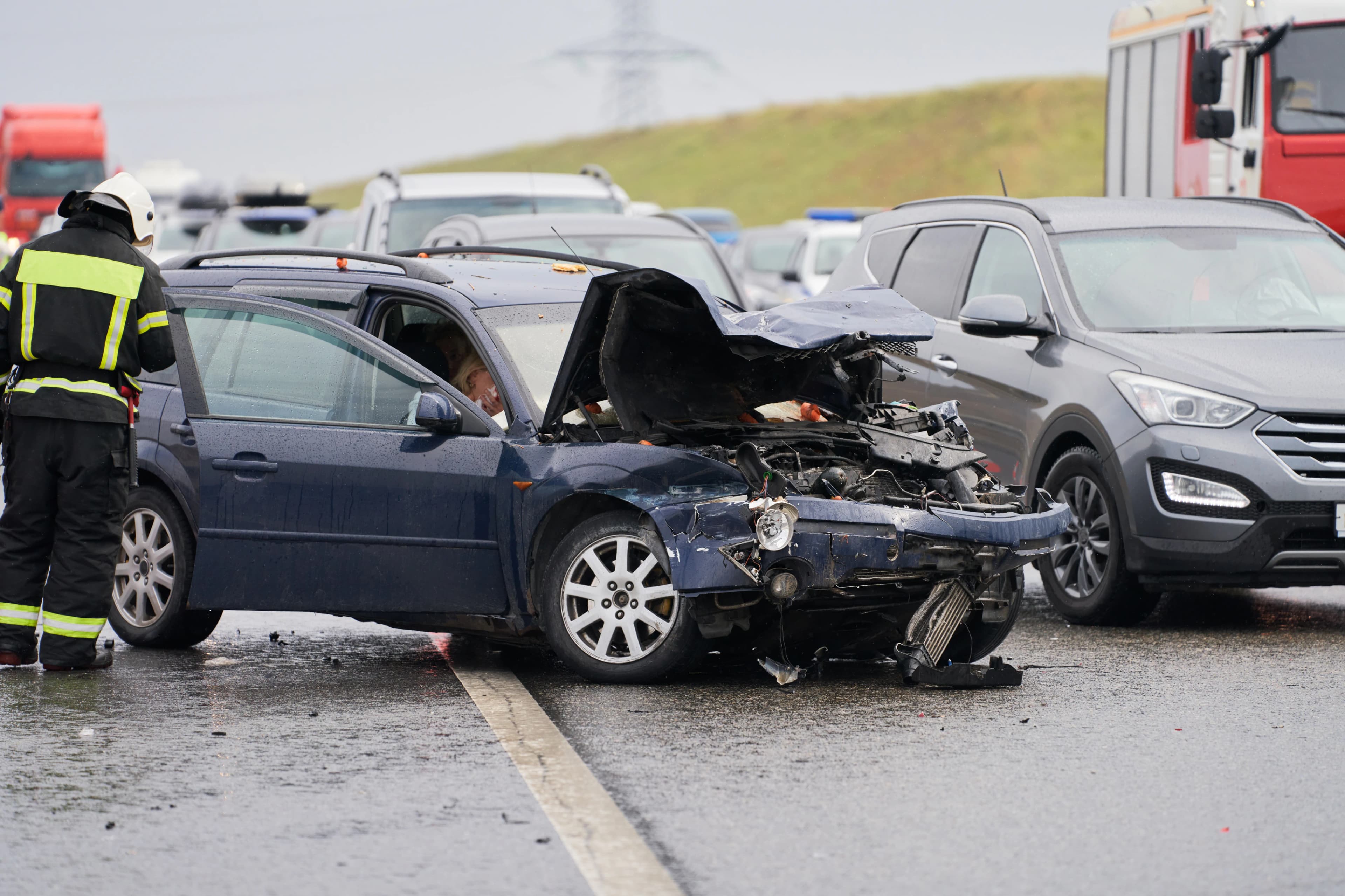


The crash only lasted a second. But months later, you're still flinching at the sound of brakes, avoiding the highway, and waking up at 3 a.m., reliving every moment of the impact. What you're experiencing isn't weakness — it's PTSD after a car accident, and it's one of the most undercompensated injuries in the Texas legal system.
Here's what the insurance companies don't want you to know: PTSD is a legitimate, compensable injury under Texas law. If someone else's negligence caused your accident, you have the right to sue for the full psychological damage it's done to your life — not just your medical bills and lost wages, but the fear, the nightmares, the relationships it's strained, and the person you were before that collision.
The problem is that insurers fight psychological injury claims harder than almost any other, because they know most people don't have attorneys who know how to prove what that suffering is actually worth. That's where Mark Thiessen and Mike "The Insider" Pita come in. As Houston car accident lawyers who fight giants, Thiessen Law Firm has recovered millions for injured Texans that insurance companies tried to shortchange — and they're ready to fight for you.
Call (713) 864-9000 today for a free consultation. You won't pay a dime unless we win your case.
“They fought for me and got me an incredible 6-figure settlement. When Jesenia told me the final number, I literally cried happy tears. This law firm isn’t just good, they’re legendary. They’ve officially earned the title of ‘my attorneys for life.’”
— Ashley B
What is PTSD after a car accident?
Post-traumatic stress disorder (PTSD) is a recognized psychiatric condition characterized by a persistent psychological response to a traumatic event. After a car accident, PTSD can manifest in ways that quietly dismantle every area of your life, including:
- Re-experiencing symptoms: Flashbacks, intrusive memories, and nightmares that force you to relive the crash over and over
- Avoidance behaviors: Refusing to drive, avoiding certain roads or intersections, withdrawing from activities you once enjoyed
- Hyperarousal: Constant anxiety, difficulty sleeping, being startled by sounds like screeching tires or car horns
- Negative mood changes: Persistent feelings of guilt, shame, hopelessness, or emotional numbness that strain relationships and make daily functioning difficult
These aren't character flaws or signs that you're struggling to "move on." They are clinical symptoms of a serious psychiatric condition — one that can require months or years of therapy, medication, and ongoing treatment to manage.
What makes PTSD particularly insidious after a car accident is that it doesn't always appear immediately. Some survivors feel fine in the days following a crash, only to find symptoms surfacing weeks later as the adrenaline fades and the full weight of what happened sets in. By the time a diagnosis is made, the insurance company may have already tried to lock you into a settlement that doesn't account for a single dollar of your psychological suffering.
That's a problem — and it's one that the right legal team can fix.
Can you sue for PTSD after a car accident in Texas?
Yes — and if someone else's negligence caused your accident, you have every right to pursue compensation for it.
Texas law recognizes psychological injuries as fully compensable as pain and suffering damages in Texas. That means the emotional distress, anxiety, nightmares, and trauma the accident has put you through aren't just things you have to live with — they're damages you can fight for in court. Insurance companies will try to convince you otherwise, exploiting the fact that psychological suffering doesn't come with a receipt. Don't believe them.
To have a viable PTSD claim in Texas, you generally need four things:
- Proof that the other driver was negligent
- Formal PTSD diagnosis
- Clear causal link between the accident and your condition
- Documented evidence that your PTSD has measurably impacted your life
That's a case worth building — and the best personal injury lawyers in Houston know exactly how to build it.
When do you have a PTSD lawsuit after a car accident?
Not every difficult experience after a crash automatically translates into a viable legal claim. To successfully pursue a PTSD lawsuit in Texas, your case needs to meet specific legal standards — and the stronger your evidence across each of these factors, the harder it becomes for an insurance company to deny what your suffering is worth.
You have a formal PTSD diagnosis
One of the most important steps you can take if you’re dealing with having PTSD after a car accident is getting evaluated by a licensed mental health professional as early as possible. Without a formal diagnosis from a qualified psychiatrist or psychologist, insurance companies will argue that your symptoms are vague, unsubstantiated, or simply not serious enough to compensate. A diagnosis doesn't just validate what you're going through — it creates the clinical foundation your entire legal claim is built on.
That diagnosis also opens the door to treatment. Knowing how to deal with PTSD from a car accident — whether through cognitive behavioral therapy, EMDR, medication, or other approaches — not only helps your recovery, it generates the medical records and treatment history that prove to a court exactly how seriously your condition has affected your life.
Your PTSD is directly linked to the accident
Even with a formal diagnosis in hand, you still need to establish that the accident specifically caused your PTSD — not a prior trauma, not an unrelated life event, but this crash. Insurance companies routinely argue that psychological symptoms are pre-existing or that something else triggered them, and without strong medical documentation connecting your diagnosis to the accident, those arguments can stick.
This is where the timing and consistency of your treatment records matter enormously. A mental health professional who can trace the onset of your symptoms directly to the date of the accident — and rule out other contributing causes — gives your legal team the ammunition they need to shut down the insurance company's attempts to muddy the waters around causation.
Another driver's negligence caused the crash
PTSD doesn't exist in a legal vacuum — it has to be the result of someone else's fault. To have a viable claim, you need to demonstrate that another driver's negligence, recklessness, or carelessness directly caused the accident that triggered your condition. This is the liability foundation of your case, and it's just as important as your medical documentation.
It's worth remembering that physical and psychological injuries rarely travel alone. Survivors dealing with neck pain, chest pain after a car accident, or other physical trauma are also highly susceptible to PTSD — and the presence of documented physical injuries can actually strengthen the credibility of your psychological claim. When the medical record shows a serious collision with real physical consequences, it becomes much harder for an insurer to argue that the psychological fallout isn't genuine.
You can document the impact on your daily life
A PTSD diagnosis alone isn't enough — you need to show what it has actually cost you. Courts and insurance companies want evidence of how your condition has disrupted your ability to work, maintain relationships, perform daily tasks, and enjoy the life you had before the accident. The more concrete and detailed that documentation is, the stronger your position at the negotiation table becomes.
This is why keeping a personal journal after your accident can be one of the most powerful things you do for your case. Recording daily entries about your symptoms, triggers, sleeplessness, and the activities you can no longer do creates a contemporaneous paper trail that no insurance adjuster can easily dismiss. Combined with testimony from family members, coworkers, or friends who have witnessed the changes in you, this kind of documentation paints a picture of loss that goes far beyond what any single medical record can capture.
Learn more: How long do car accident settlements take?
Your symptoms have required medical treatment
If your PTSD has driven you to seek professional help — therapy, psychiatric care, medication, or inpatient treatment — that treatment history is some of the most compelling evidence in your case. It demonstrates that your condition is serious enough to require ongoing professional intervention, and it creates a documented record of both your suffering and its financial cost.
Treatment also signals to the court and the insurance company that you aren't exaggerating. People who are genuinely suffering seek help. Every appointment, every prescription, every referral adds another layer of credibility to your claim and another line item to the damages you're owed. Don't minimize your symptoms or delay treatment to avoid the cost — getting the help you need is both the right thing to do for your recovery and the smartest thing you can do for your case.
How much compensation for PTSD after a car accident?
It's one of the first questions injured victims ask — and one of the hardest to answer with a single number. The value of a PTSD claim after a car accident depends on a wide range of factors, and no two cases are exactly alike.
- Severity and duration of symptoms: A PTSD diagnosis requiring years of intensive treatment is worth significantly more than one resolved with a short course of therapy.
- Impact on your ability to work: Lost wages and diminished earning capacity can add substantial economic damages on top of your non-economic claim.
- Quality of your documentation: The stronger your medical records, treatment history, and personal documentation of daily impact, the harder it is for insurers to lowball your claim.
- Clarity of liability: The more clearly the other driver was at fault, the less leverage the insurance company has to reduce your recovery.
- The defendant's insurance coverage: Policy limits can affect the maximum available recovery, though an experienced attorney will explore every possible avenue to maximize your compensation.
What we can tell you is this: the insurance company's first offer almost never reflects what your claim is actually worth. Psychological injury claims make insurance companies uncomfortable — and they use that discomfort as a weapon against you. Unlike a fractured vertebra visible on an X-ray or MRI, PTSD doesn't show up on any scan. Adjusters are trained to question the severity of your symptoms, suggest your condition is pre-existing, and argue that your suffering isn't worth anywhere near what you're claiming.
Without an attorney who knows how to counter those tactics and build an airtight case around your diagnosis, treatment history, and documented life impact, you're at a serious disadvantage at the negotiating table.
PTSD after a car accident — FAQs
What are the signs of PTSD after a car accident?
Common signs include flashbacks or intrusive memories of the crash, persistent anxiety or hypervigilance, avoiding driving or certain roads, difficulty sleeping, emotional numbness, and withdrawal from people or activities you once enjoyed.
Symptoms can appear immediately after the accident or emerge weeks later as the initial shock wears off. If you recognize any of these signs in yourself, seek a professional evaluation as soon as possible — early documentation strengthens both your recovery and your legal claim.
How to prove PTSD after a car accident?
Proving PTSD requires a formal diagnosis from a licensed mental health professional, medical records that trace your symptoms directly to the accident, and documented evidence of how your condition has impacted your daily life.
Expert testimony from your treating psychiatrist or psychologist can be particularly powerful in court, as it gives clinical authority to what you've experienced. An experienced attorney will also build supporting evidence through personal journals, witness statements from people close to you, and employment records showing the impact on your work.
How long do PTSD symptoms last after a car accident?
The duration of PTSD symptoms varies widely depending on the severity of the trauma, individual circumstances, and whether you receive proper treatment. Some survivors see significant improvement within a few months with consistent therapy, while others manage symptoms for years.
You deserve more than a lowball offer and a dismissal — call the Houston car accident lawyers who fight giants.
Insurance companies have spent decades perfecting the art of underpaying victims of PTSD after a car accident. They have the adjusters, the algorithms, and the attorneys. What they don't have is our team.
At Thiessen Law Firm, Mark Thiessen brings the relentless courtroom aggression of a quadruple board-certified trial attorney who has secured multi-million dollar verdicts for injured Texans whom corporate giants thought they could push around. Mike "The Insider" Pita spent years inside the insurance industry learning exactly how major carriers evaluate claims, train their adjusters, and decide when to lowball and when to stonewall. Now he uses every bit of that knowledge against them — on your behalf.
Call Thiessen Law Firm today at (713) 864-9000 or contact us online for a free consultation. You won't pay a dime unless we win your case.
More Helpful Articles by We Fight Giants:
- Can You Sue An Insurance Company in Texas?
- Concussion After Car Accident: Delayed Symptoms
- How to Recover Lost Wages After an Accident
- How Long Does Whiplash Last After a Car Accident?
- Everything You Need To Know About Insurance Bad Faith