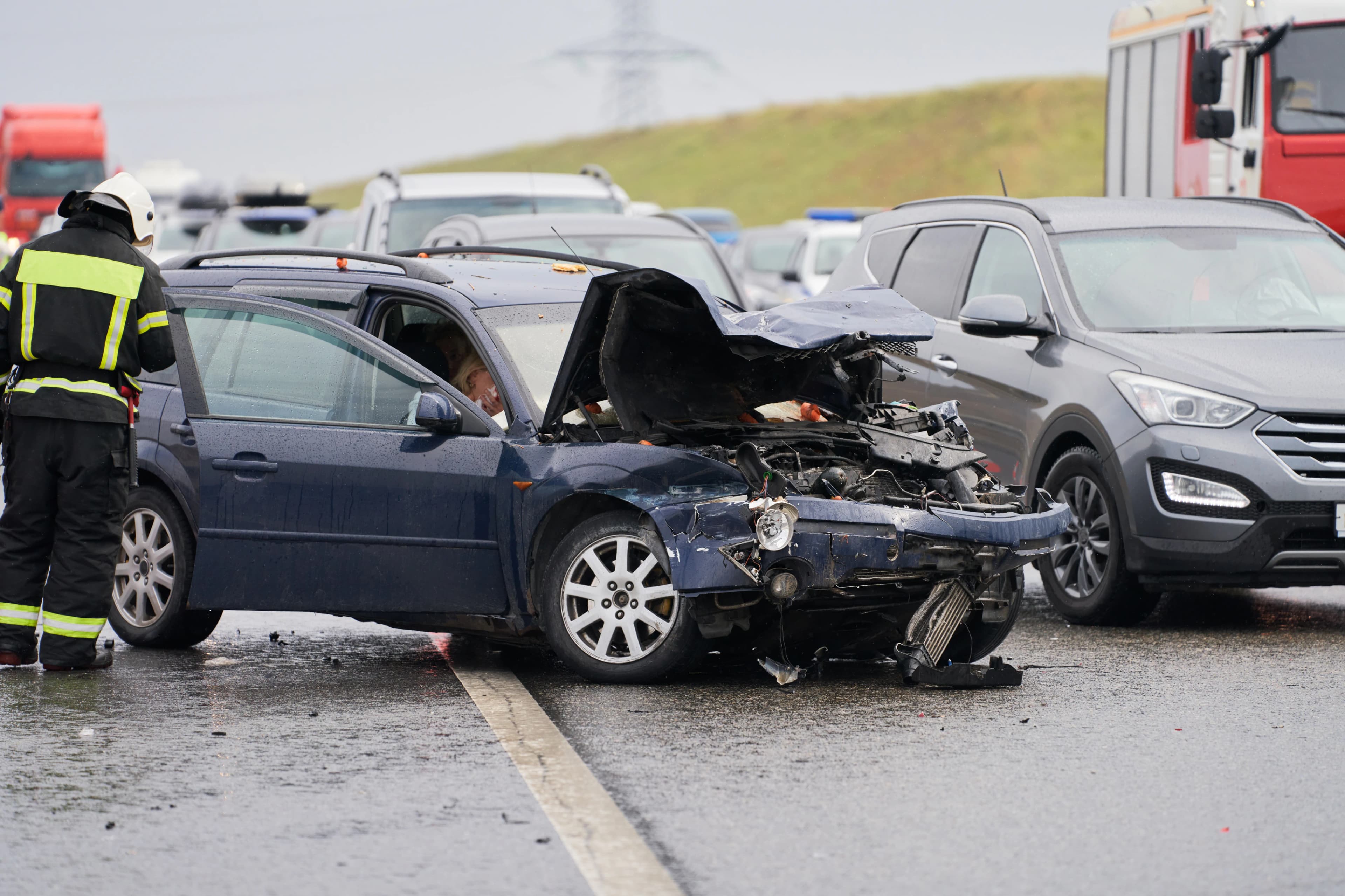

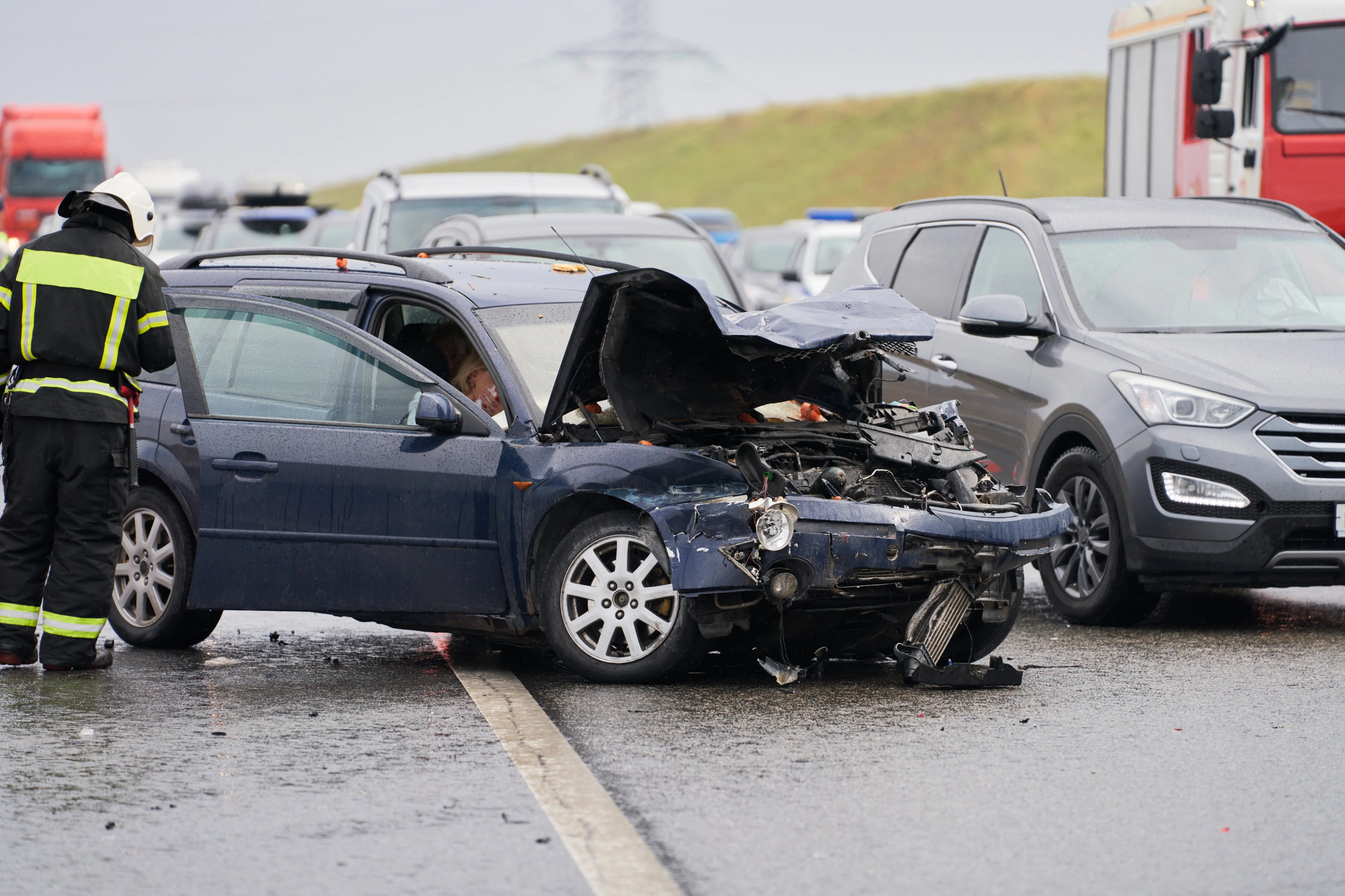
T-bone accidents — also called side-impact collisions — are among the most violent crashes on Texas roads, and they leave victims with devastating injuries, mounting medical bills, and one burning question: who's responsible for this?
Determining fault in a T-bone accident isn't always as simple as pointing to the driver who struck you. Fault depends on the specific facts of the crash, but these are the most common scenarios:
- A driver who ran a red light or stop sign is almost always at fault
- A driver who failed to yield when turning left or entering an intersection bears responsibility
- A speeding driver who couldn't stop in time may share or carry full fault
- A distracted or impaired driver who entered an intersection illegally is liable for the resulting collision
- Multiple drivers can share fault under Texas's comparative negligence rules
- Third parties — like a negligent municipality or a defective traffic signal manufacturer — can also be responsible
- Insurance companies that act in bad faith when handling your claim
The truth is, fault is rarely obvious — it's established through evidence, investigation, and attorneys who refuse to let the other side rewrite what happened.
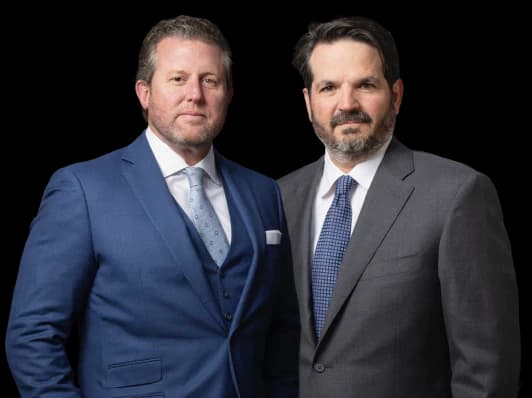
That's exactly what the Houston car accident lawyers who fight giants at Thiessen Law Firm do. If you or someone you love has been hurt in a side-impact crash, don't let the insurance giants bury your claim under a mountain of delays and denials. Mark Thiessen and Mike "The Insider" Pita know every trick in the insurance industry's playbook — and they've spent their careers making those tricks backfire.
Call Thiessen Law Firm today at (713) 864-9000 for your free consultation. You won't pay a dime unless we win.
“They fought for me and got me an incredible 6-figure settlement. When Jesenia told me the final number, I literally cried happy tears. This law firm isn’t just good, they’re legendary. They’ve officially earned the title of ‘my attorneys for life.’”
— Ashley B
How is fault determined in a T-bone accident?
Texas follows a modified comparative negligence rule, meaning fault can be shared between drivers, and as long as you're found less than 50% at fault, you can still recover compensation.
Insurance companies know this, and they'll work overtime to inflate your share of the blame to reduce what they owe you. Fault is established through:
- Police reports
- Traffic violations
- Surveillance footage
- Witness statements
- Physical evidence
- Accident reconstruction experts (in disputed cases)
Fault is rarely handed over willingly. The other driver's insurance company will scrutinize every detail of the crash, looking for ways to shift blame onto you. Knowing how fault is built — and challenged — is the first step toward protecting your claim, and having the best personal injury lawyers in Houston fighting for you is next.
Who is usually at fault in a T-bone accident?
Fault in a T-bone accident isn't always obvious, and it rarely goes uncontested. The circumstances of every crash are different, and the other driver's insurance company will do everything in its power to muddy the waters.
Here’s how fault typically breaks down in these cases:
The driver who ran a red light or stop sign
Running a red light or stop sign is one of the clearest examples of negligence on Texas roads. When a driver blows through a controlled intersection and T-bones another vehicle, the evidence trail is often strong — traffic cameras, witness statements, skid marks, and the point of impact on the struck vehicle all point to who had the right of way.
A T-bone accident on the passenger side is particularly common in these situations, where the at-fault driver enters the intersection without stopping and strikes the crossing vehicle directly on the side where a passenger may be sitting. Texas Transportation Code makes clear that drivers must obey traffic control devices. A violation isn't just a traffic ticket — it's evidence of negligence that can anchor your entire personal injury claim.
The driver who failed to yield
Failure to yield is one of the leading causes of T-bone accidents in Texas, particularly at uncontrolled intersections and during left turns. A driver who pulls into traffic without yielding, or who misjudges the speed of an oncoming vehicle, can cause a catastrophic side-impact collision in a fraction of a second.
These crashes frequently result in serious injuries — neck pain, chest pain after a car accident, and broken bones are among the most common — because the side of a vehicle offers far less protection than the front or rear. The challenge is that these accidents often come down to one driver's word against another's, which is exactly why independent evidence — dashcam footage, eyewitnesses, and accident reconstruction — is so important.
A speeding driver
Speed kills reaction time. A driver traveling above the posted limit may have had no chance to stop, even if they saw the danger coming, and Texas courts recognize excessive speed as a form of negligence. When a speeding driver fails to clear an intersection in time or cannot brake before striking another vehicle broadside, they bear significant responsibility for the resulting collision and its consequences.
Car accident settlements in Texas speeding cases can be substantial, particularly when the injuries are severe. Black box data, traffic camera footage, and skid mark analysis can all be used to establish how fast a driver was going at the time of impact. Insurance companies will push back hard on speed-related claims, often arguing that their driver was within the limit or that road conditions played a role. A thorough independent investigation is the only way to hold a speeding driver fully accountable.
Learn more: How long do car accident settlements take?
A distracted or impaired driver
A driver who is texting, adjusting a GPS, or under the influence of alcohol or drugs has no business being behind the wheel — and when their inattention causes a T-bone accident in a parking lot or at an intersection, the legal and moral responsibility falls squarely on them.
Distracted and impaired driving cases often produce strong evidence: cell phone records, toxicology reports, witness accounts of erratic behavior, and surveillance footage can all establish that the at-fault driver was not in control of their vehicle.
The injuries from these crashes can be severe, and so can the emotional toll. Emotional distress, anxiety, and PTSD are recognized consequences of violent collisions in Texas, and victims are entitled to seek compensation for the psychological impact of the crash alongside their physical injuries. When a driver's reckless or intoxicated behavior is the cause, Texas law may also allow for punitive damages on top of standard compensation.
Multiple drivers
Not every T-bone accident has a single villain. Texas's modified comparative negligence system allows fault to be divided among multiple parties, and in complex intersection crashes, both drivers may bear some degree of responsibility. One driver may have been speeding while the other failed to yield — and the insurance companies for both will be working to maximize the other's share of the blame to minimize their own exposure.
Pain and suffering damages in Texas are available even when you share some fault in the accident, as long as your responsibility doesn't exceed 50%. However, every percentage point of fault assigned to you reduces your recovery, which is why the fight over comparative negligence can be just as consequential as the fight over liability itself. Having attorneys who understand how to push back against inflated fault assignments is critical in multi-driver cases.
Third parties
Sometimes the driver who hit you isn't the only one responsible — or even the most responsible party. Defective traffic signals, poorly designed intersections, inadequate signage, and dangerous road conditions are all factors that can shift partial or full liability onto a government entity or private contractor. Vehicle defects like brake failures or faulty steering components can implicate a manufacturer. In commercial vehicle crashes, a trucking company's negligent hiring or maintenance practices may be on the hook.
Third-party insurance claims add a layer of complexity that most accident victims aren't equipped to navigate alone. Government entities in Texas have specific notice requirements and shorter deadlines for filing claims, and manufacturers have well-funded legal teams ready to fight liability at every turn. Identifying every responsible party — not just the other driver — is one of the most important things an attorney can do to maximize your recovery.
Insurance companies
Technically, you don't sue the other driver's insurance company directly in Texas — you sue the at-fault driver, and their insurance company steps in to defend them and pay any judgment up to the policy limits. That said, if an insurance company acts in bad faith — unreasonably delaying your claim, denying a valid claim without basis, or failing to investigate properly — Texas law gives you the right to take action against them directly.
In practice, the threat of litigation is often the most powerful tool available to accident victims. Insurance companies are far more likely to take your insurance claim seriously and offer fair compensation when they know they're dealing with attorneys who are prepared to file suit and see it through. Bad faith insurance practices carry real consequences in Texas, including the possibility of additional damages beyond your original claim.
T-bone accident — FAQs
What is the most common injury in a T-bone car accident?
Side-impact collisions leave occupants with very little structural protection, making head, neck, and chest injuries the most common results. Traumatic brain injuries, broken ribs, spinal damage, and soft tissue injuries that may not appear until days after the crash are all frequently seen in T-bone accidents.
What is the 51 percent rule in Texas?
Texas's 51 percent rule means you can only recover compensation if you are found to be less than 50 percent at fault for the accident. If you are assigned 51 percent or more of the blame, you are barred from recovering anything — which is exactly why insurance companies work so hard to shift fault onto the victim.
How long do I have to file a T-bone accident claim in Texas?
In Texas, the statute of limitations for a personal injury claim is two years from the date of the accident. Missing this deadline almost always means losing your right to recover compensation entirely, so it's important to consult with an attorney as early as possible.
You've been hit hard enough — let Thiessen Law Firm hit the giants back.
A T-bone accident doesn't just damage your vehicle — it can shatter your health, your finances, and your sense of security in an instant. While you're focused on recovering, the other driver's insurance company is already building a case designed to pay you as little as possible. They're counting on you being overwhelmed, uninformed, and willing to accept whatever they offer just to make the process stop.
That's not justice. That's a giant taking advantage of someone who deserves better.
At Thiessen Law Firm, we've built our reputation on refusing to let that happen. Mark Thiessen and Mike "The Insider" Pita have spent their careers going toe-to-toe with the biggest insurance companies in the country and winning — and they're ready to do it for you. We investigate exhaustively, fight aggressively, and don't back down until you get every dollar you're owed. You won't pay a dime unless we win your case.
If you or someone you love has been hurt in a T-bone accident in the Greater Houston area, don't wait. Call Thiessen Law Firm today at (713) 864-9000 or contact us online for your free consultation. We're available 24/7 — because the insurance giants don't take days off, and neither do we.
More Helpful Articles by We Fight Giants:
- Can You Sue An Insurance Company in Texas?
- Concussion After Car Accident: Delayed Symptoms
- How to Recover Lost Wages After an Accident
- How Long Does Whiplash Last After a Car Accident?
- Everything You Need To Know About Insurance Bad Faith